

Most our pure oud oil comes from the resinous heartwood of Aquilaria sinensis trees. These trees produce resin only when they're wounded and infected by a specific fungus — a process that takes years or even decades. Every step involves countless variables:
Tree genetics – Different trees, even in the same forest, have unique profiles
Fungal strains – The specific microorganisms involved vary by location
Climate and soil – Temperature, humidity, and mineral content all play a role
Aging time – Resin can mature for 5, 10, or even 50+ years before harvest
Harvest location – Resin composition differs between trunk, branch, and root
As a result, even the same producer using the same forest can produce successive batches with subtle differences in longevity, projection, top notes, dry-down, and complexity.
That's not inconsistency. That's nature expressing itself.
Mainstream perfumes smell identical bottle after bottle because they're made from synthetic aroma chemicals or isolated molecules.
But natural oud oil is different.
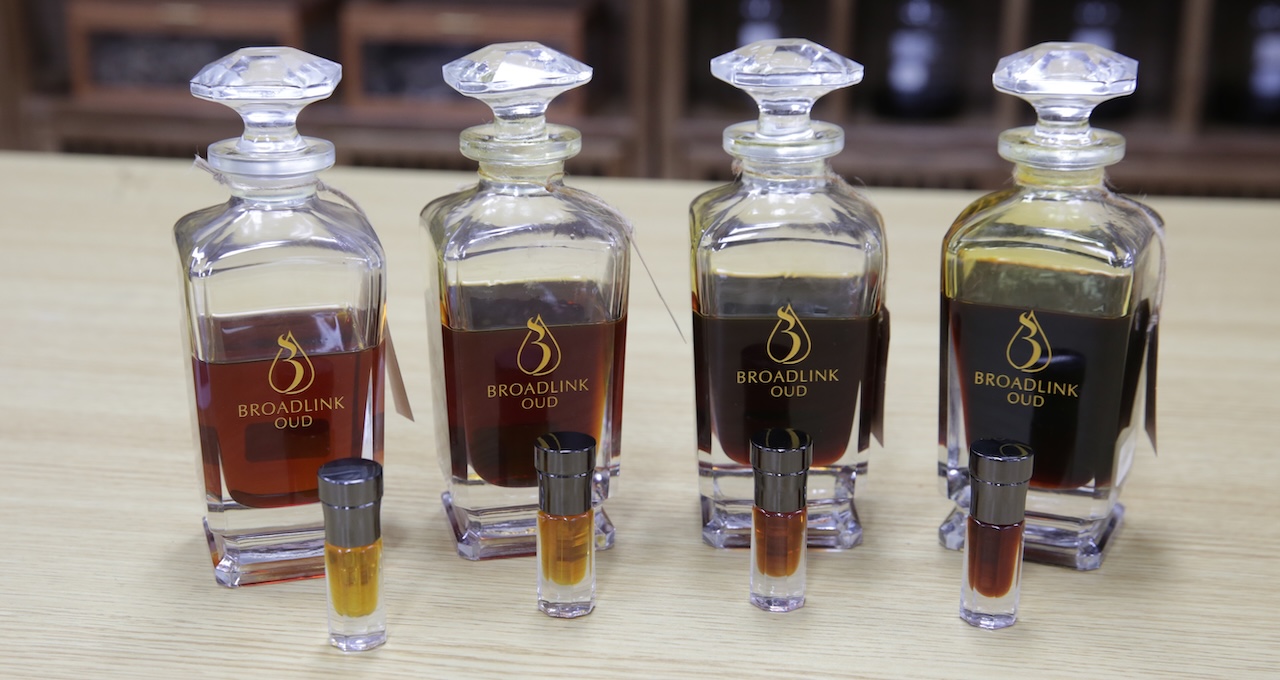
No two batch are exactly alike. Each batch tells a story of its own time, place, and conditions.
Not all variation is equal. Here's what to look for:
High-quality natural oud oil from a given region will retain its regional character — sweet and airy for some regions, deep and leathery for others. If the scent profile is completely unrecognizable from batch to batch, that's a problem. But subtle shifts in floral vs. woody vs. fruity notes are completely normal.
Some people prefer a batch with more cooling mint-like top notes. Others love a batch with richer honeyed sweetness. Instead of seeing variation as a flaw, treat it as an opportunity — different oils for different moods or seasons.
Ethical distillers don't try to "fix" natural variation with additives. Instead, they:
Source from consistent, traceable forests (same region, same tree age range)
Use standardized extraction methods (hydrodistillation or supercritical CO₂)
Test each batch with GC-MS to ensure purity and safety
Reject any batch that falls outside acceptable quality boundaries
If you see these claims, be very skeptical:
| Seller claim | What it really means |
|---|---|
| "Every batch smells identical" | Almost certainly synthetic fragrance oil |
| "30% yield from 100-year-old trees" | Real yield is 0.1–2%; this is a lie |
Always buy from vendors who publish batch numbers, GC-MS reports, and origin details. Transparency is the best guarantee of authenticity.
Oud oil's beauty lies precisely in its natural variation. Every batch carries the memory of rainfall, soil microbes, fungal symbiosis, and the slow passage of years.
So next time you open a fresh batch of natural pure oud oil, don't expect a clone of your last bottle. Instead, bring it close, take a slow breath, and discover what makes this batch special — its unique balance of sweetness, bitterness, woodiness, or cooling notes.
Nature is never perfect. But it is always real.
Have questions about evaluating pure oud oil? Feel free to contact us — we're happy to help you!